In this topic, we should get to know what project management is.
What is Project Management?
Project Management is simply “the practice of initiating, planning, executing, controlling and closing the work of a team to achieve specific goals and meet specific success criteria at the specified time.”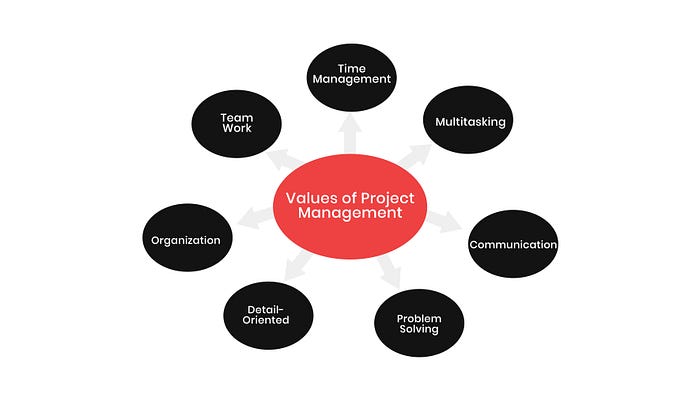
Who is a project manager?
“A project manager is a person who is responsible for leading the project. In other words, project managers are the spearheads of a project. They ensure that the project is completed within the specified deadline and gets delivered to the client without any flaws. PM handles all the aspects of the project from the project initiation to project delivery.”
We can divide PM into,
-Project Planner
-Project Scheduler
-Project Coordinator
-Working with people
Phases in a Project Life Cycle.
The completion and approval of one or more deliverables define a project phase. In iterative system development, a new phase can start without closing the previous phase. A phase can be closed without initiating the subsequent phase.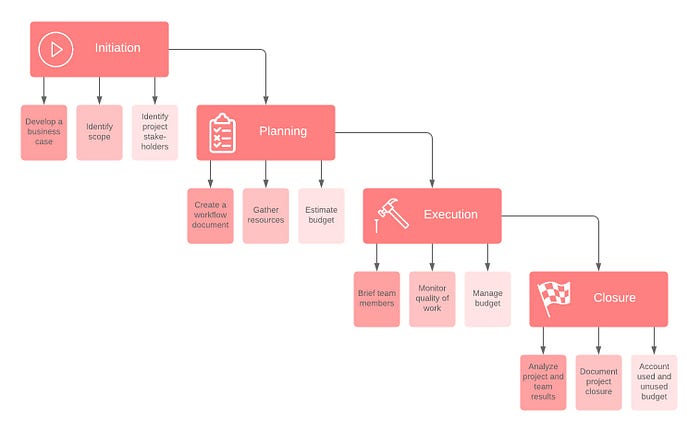
Project Parameters.
1. Scope
2. Quality
3. Cost
4. Time
5. Resources
– Constitute the most important parameters. It is vital right from the start of your project planning to try to define how each of these will affect your project.
A change in one would need changes in others to balance the equilibrium.
1. Scope – Defines boundaries of the project: what’s done and not done.
2. Quality – You need to be aware of the quality parameters involved in the project. Quality standards may be imposed from outside, as in the case of residential care, or they may need to be devised internally and fleshed out in the planning stage of the project. In doing this, you need to be able to answer the question, “Is this good enough?
We can specify two quality subsystems,
Product Quality: Quality of the deliverable from the project
Process Quality: Quality of project management focuses on how well the process works and how it can be improved.
3. Cost – You may have to draw up the project budget, or it may have been set by others. You will certainly be responsible for ensuring that the budget is not overspent and that income (if appropriate) is raised according to plan. You may need to ensure that the phasing of income expenditure is achieved successfully so that you have enough money for the project’s needs in plenty of time.
4. Time – Your project deadline is bound to be one of your most important parameters. What is the finish time and why? There will be many relationships between the budget and the deadline, in that you may have to work within a particular financial year or account to a funder for money spent over a particular period.
“Cost and time are inversely related.” The time a project takes to complete can be reduced, but cost increases as a result.
5. Resources – Assets such as people, equipment, physical facilities, or inventory that have limited availabilities can be scheduled or can be leased from an outside party.
Some are fixed; others are variable only in the long term. Central to the scheduling of project activities and the orderly project completion.
Organizational Structure
The way your organization is structured influences how you manage and run projects. It can also influence how much authority and reach you have to do your job as a project manager.
There are three common organizational structures:
– Functional
– Projectized
– Matrix
Functional Organization
In a functional organization structure, the project manager and all the resources work in the same company division, such as the sale and marketing department. Generally, the functional manager has more authority than the project manager.
Pros:
– Clear definition of authority
– Eliminates duplication
– Encourage specialization
– Clear career paths
Cons:
– ”Walls”: can lack customer orientation
– ”Silos”: create longer decision cycles
– Conflicts across functional areas
– Project leaders have little power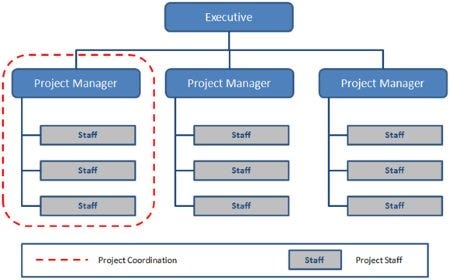
Pros:
– Unity of command
– Effective intra-project Communication
Cons:
– Duplication of facilities
– Career path
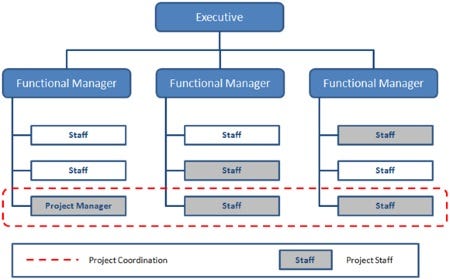
Matrix Organization
Resources are shared across both business-as-usual work and project work. It might mean having two managers or “dotted-line” responsibilities to a project manager as well as to the team manager
Pros:
– Project integration across functional lines
– Effective use of resources
– Retains functional teams
Cons:
– Two losses for personal
– Complexity
– Resource and priority Conflicts
Matrix Forms
Weak, strong, and balanced degrees of relative power
Weak: Functional-Centric

Strong: Project-Centric

Balanced:
Conclusion
Project management is a structured and disciplined approach that ensures the successful delivery of projects by balancing key parameters such as scope, quality, cost, time, and resources. A project manager plays a critical role in guiding the team through each phase of the project life cycle, from initiation to completion, while adapting to organizational structures and managing constraints effectively. Understanding these fundamentals not only helps in executing projects efficiently but also in making informed decisions when challenges arise. Ultimately, strong project management practices lead to better outcomes, improved collaboration, and the successful achievement of project goals.
Comments (...)
You must be signed in to join the discussion.